
STATE-0: From brand philosophy to launched store
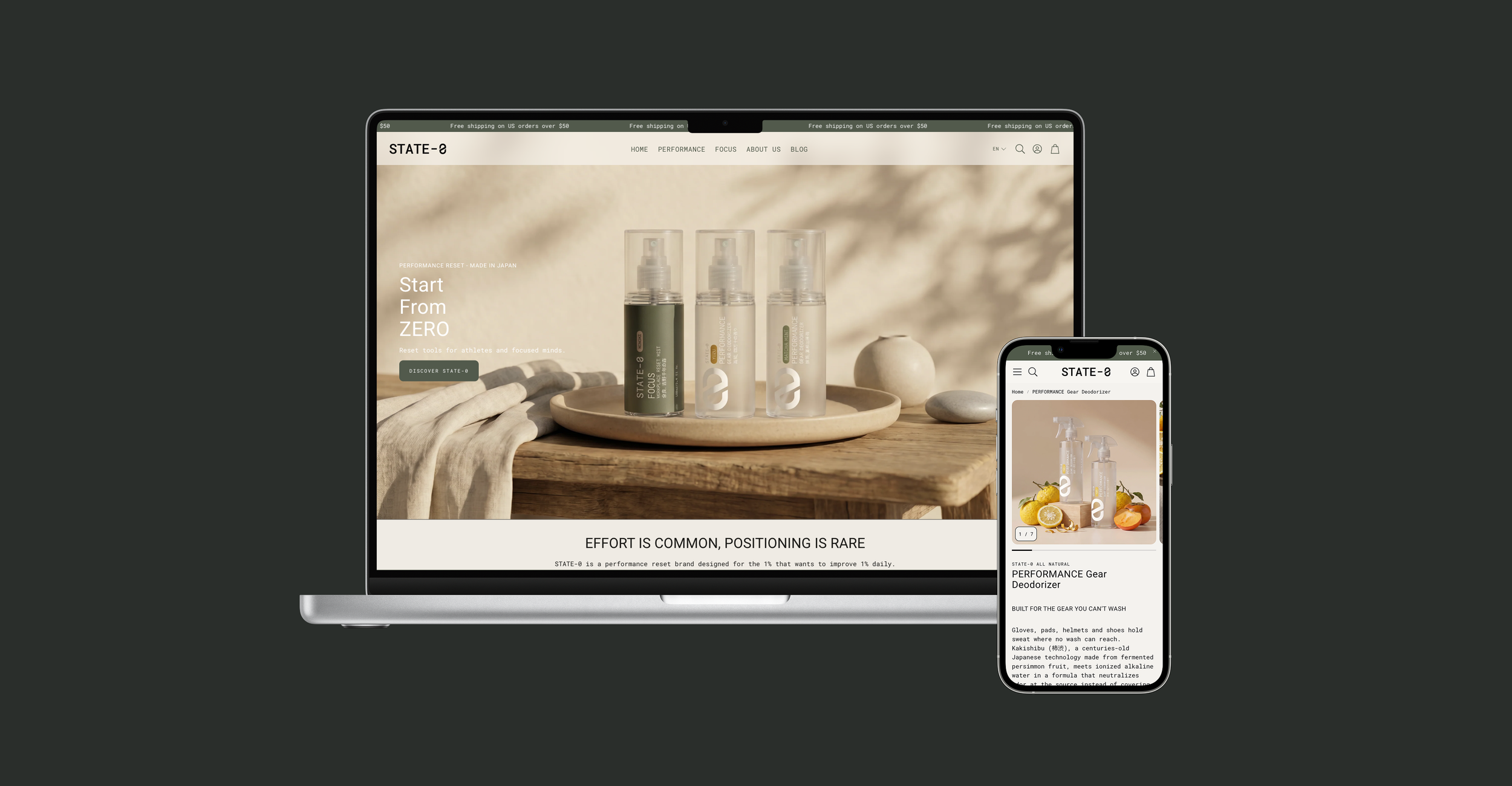
A founder wanted to bring a Japanese gear deodorizer to the US. He had a formula, a brand philosophy, and no visual identity. As the only designer, I took it from brand deck to a launched Shopify store. Every image on the site, people included, is AI-generated.
Role:
Creative Lead (contract), sole designer
Timeline:
Jan–Oct 2026 (launched September)
Scope:
Brand identity · Packaging · Website art direction and content hierarchy · Product explainer visuals · Social and Meta ad creative
Tools:
Figma, Shopify, Higgsfield, ChatGPT, Claude, Adobe CC
The brief
The founder had a product and a point of view. Nothing a customer could see existed yet.
The product pairs kakishibu, a fermented persimmon tannin used in Japan for centuries, with ionized alkaline water. It neutralizes sweat odor in gear instead of covering it with fragrance, which is what most US sports sprays do.
I was handed a brand deck, an audience persona, a list of reference brands and one direction: Japandi. "Made in Japan" had to be a selling point, but the brand had to feel right to US shoppers.
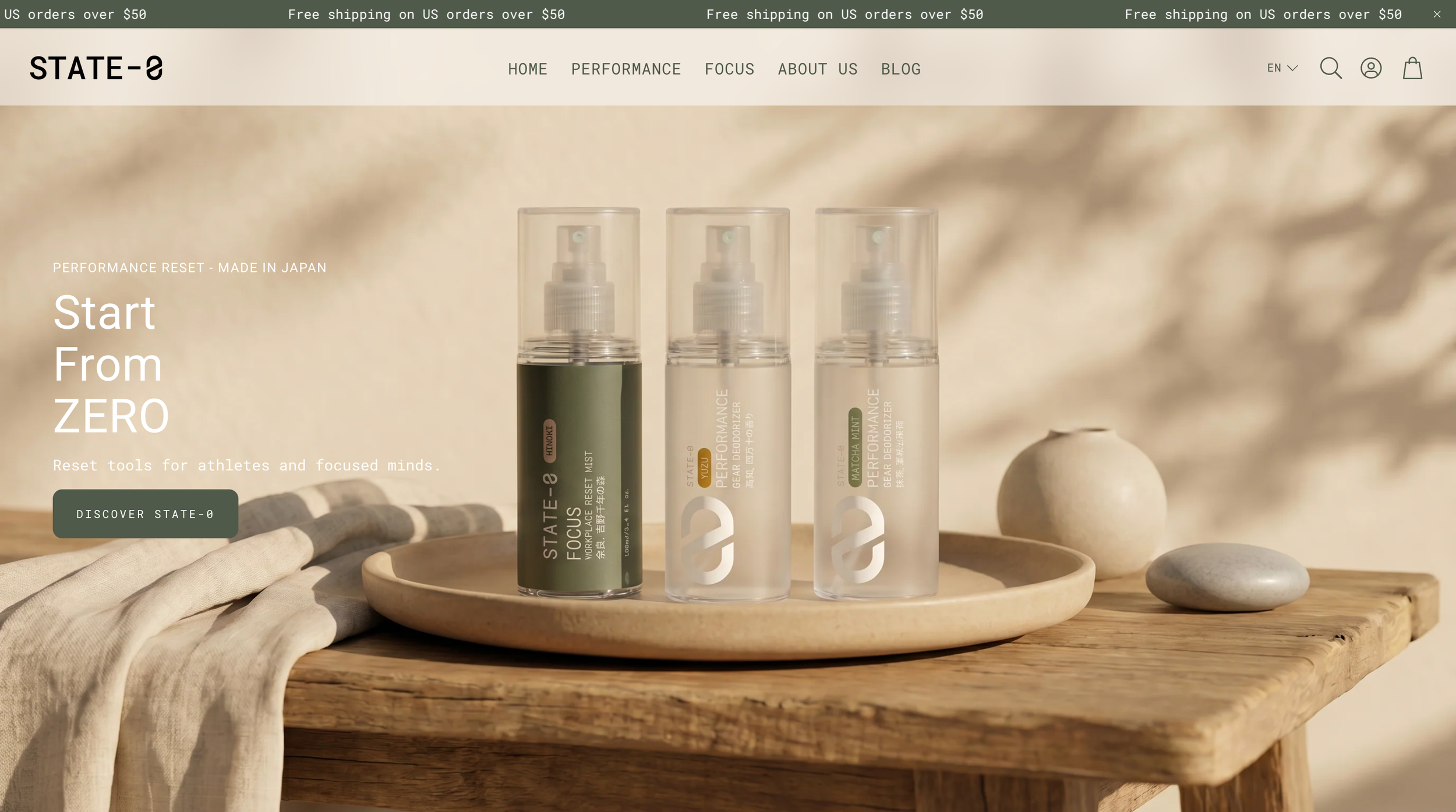
What I was handed
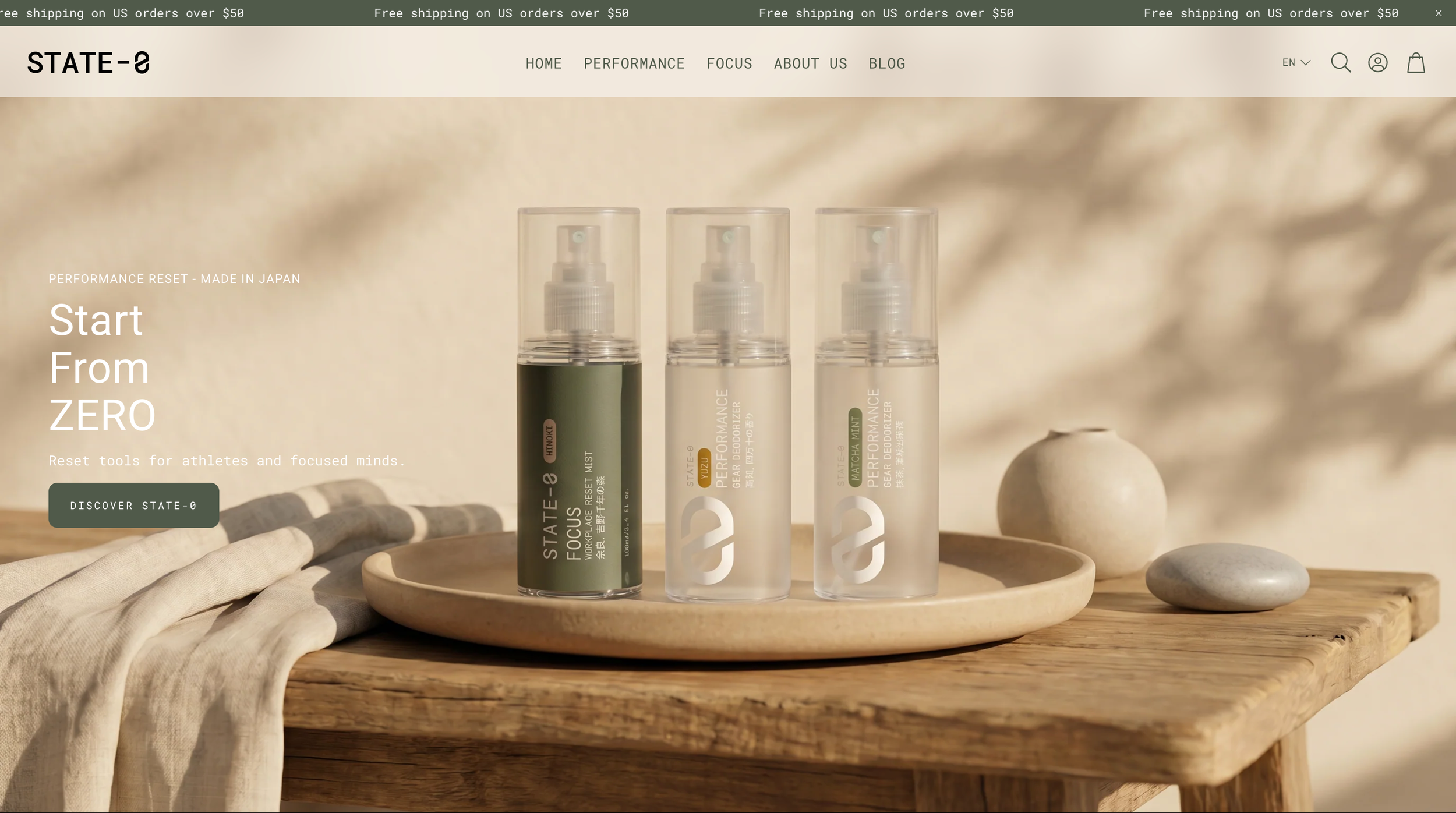
What shipped
Turning the brief into design
The persona describes a buyer who says, "I don't need hype — I need things that work." Most of my decisions came back to that line: show the claim, don't just make it.
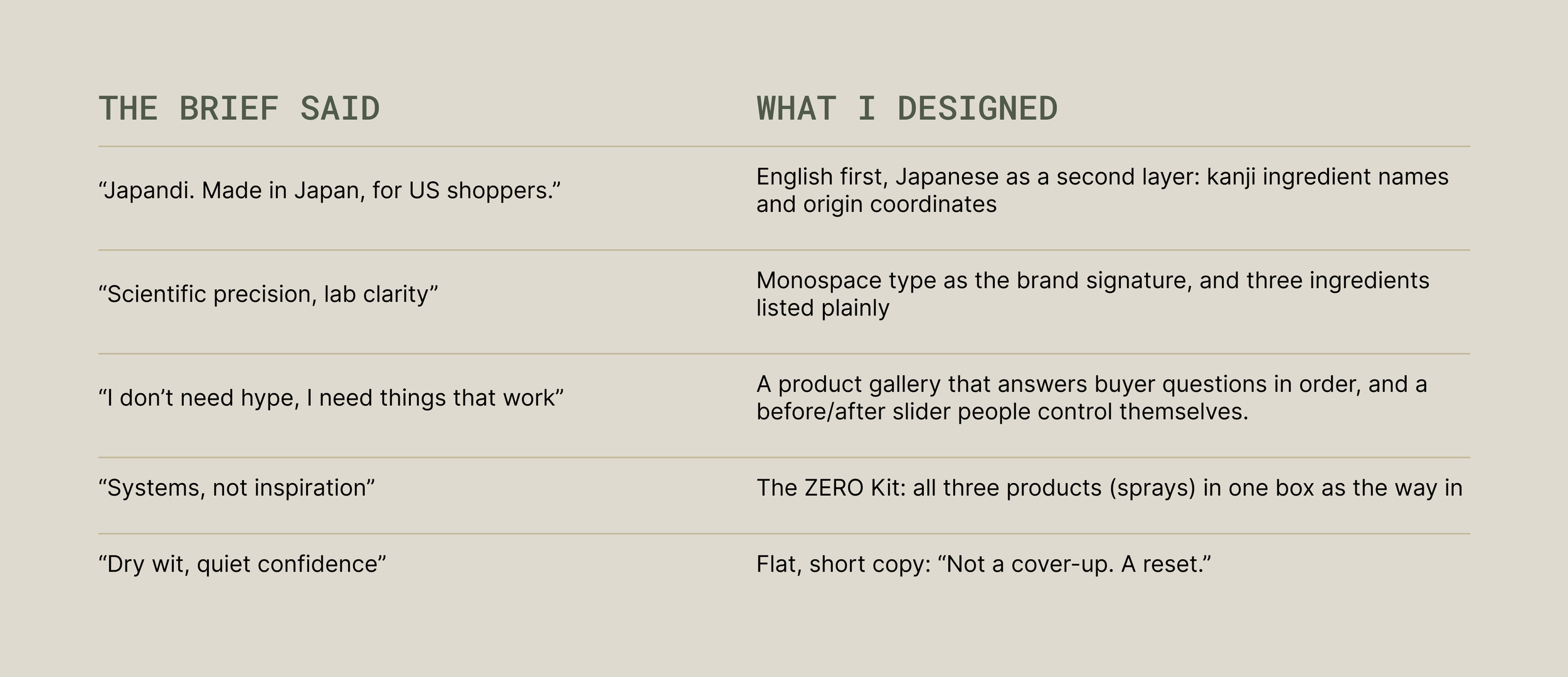
Design the gallery for people who don’t read
Most shoppers click through product images and skip the description. So I designed the seven listing images as a sequence, each one answering the next question a skeptical buyer asks.
The founder studied top-performing Amazon listings, and we ordered the images based on that research.

On Instagram, the same story runs as four lines:
Gear absorbs sweat.
Sweat turns acidic.
Acid becomes odor.
Kakishibu neutralizes it at the molecular level.
Someone tapping through from a post sees the same story continued on the product page.